Full hunt sequence for cats: how to play
The guided version of a hunt: stalk, chase, pounce, catch, eat, groom, sleep. Use the timer to pace each phase and finish with a meal.
- Time
- 15 min
- Energy
- High
- Space
- A room
You'll need
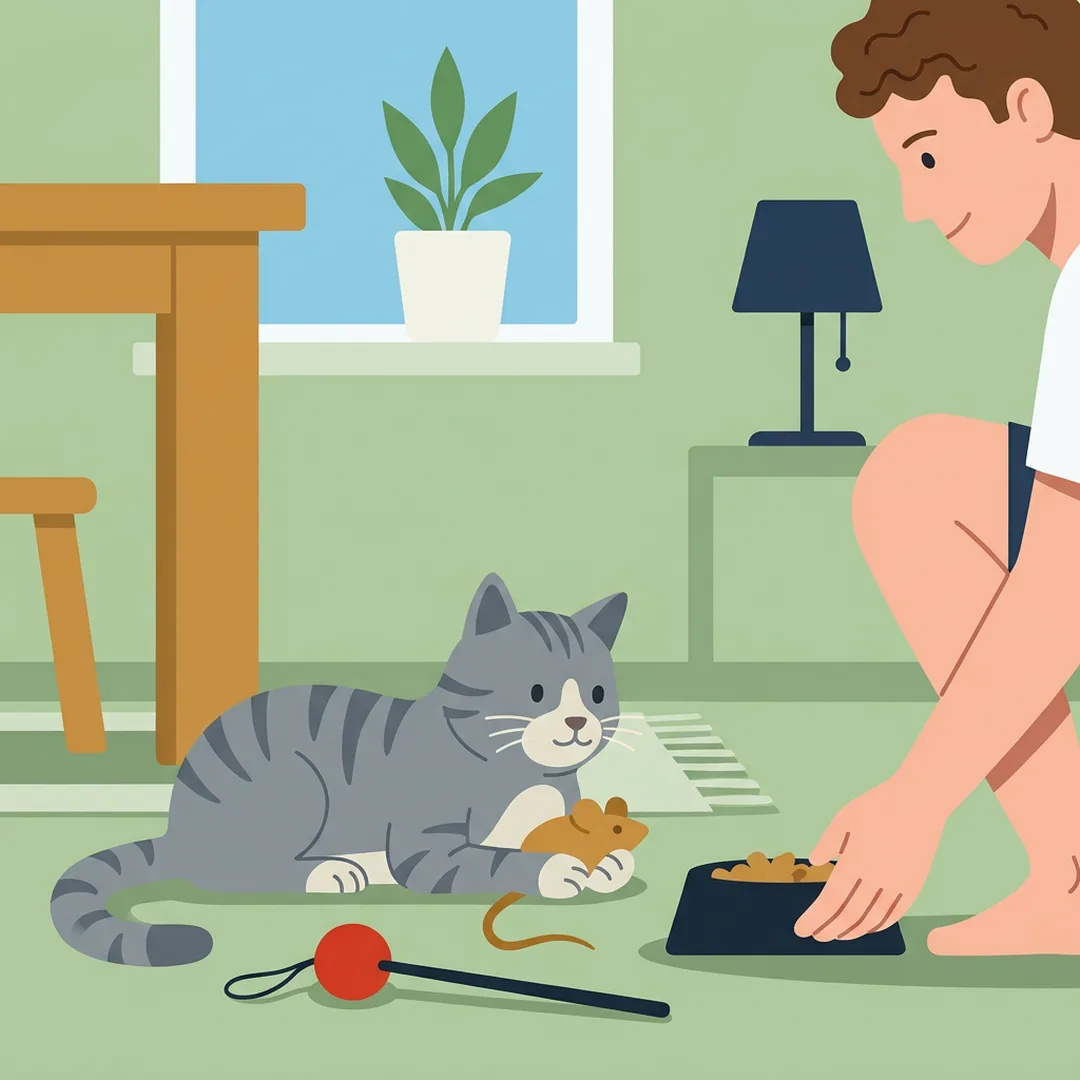
- one or two wand toys your cat loves
- the next meal
Set up
Plan this right before a meal. Have the meal ready but out of sight. Use the toy that matches your cat's play style.
How to play
Stalk (2 to 3 minutes): slow moves, toy hiding behind cover, long pauses. Let your cat creep and plan.
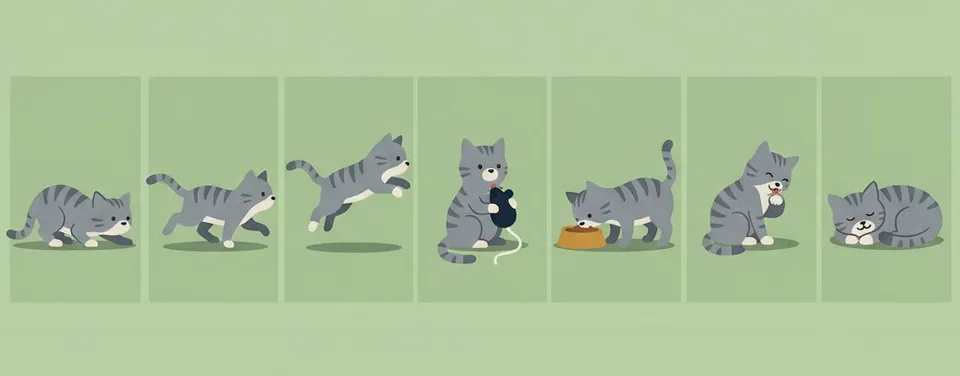
Chase (3 to 4 minutes): short bursts, changes of direction, a couple of escapes.
Pounce and catch (2 to 3 minutes): let your cat catch the toy every 2 or 3 tries. Let it bite and kick.
Cool-down (2 minutes): the toy slows, moves less, and finally lies still. Let your cat make the last catch and keep it a moment.
Eat: serve the meal right away.
Groom and sleep: leave your cat in peace. Most cats groom and nap after eating. Note how long it takes to settle.
House rules
- Follow the phases in order.
- No new excitement after the cool-down.
- The meal comes right after the final catch.
- Make it easier
- Shorten each phase to a minute. Seniors and new players can do the whole thing in 5 minutes.
- Make it harder
- Use two toys of different prey types and switch once in the chase phase. Add a short second chase if your cat is still keen.
Signs it's having fun
Full focus during each phase, eats with appetite, grooms and then sleeps calmly.
Stop if you see
Panting, flattened ears, tail lashing, or your cat leaves and does not come back. End with a calm catch if you can.
Safety
 Safety
- Watch breathing. Cats should not pant. If your cat pants, stop and let it rest; call your vet if it does not settle quickly.
- Put wand toys away in a closed cupboard after the session.
Sources
- Interview with Jackson Galaxy on the hunt, catch, kill, eat, sleep routine (The Spinoff)
- Setting up the environment for success (AAFP)
- Playing with your cat (Battersea)
Written from these sources and checked against vet and trainer guidance. General guidance, not veterinary advice.
Game · 15 min
Bedtime hunt for cats: how to play
A big play session before the last meal of the day, so your cat is ready to sleep when you are. Helps with night zoomies and early wake-ups.
Game · 8 min
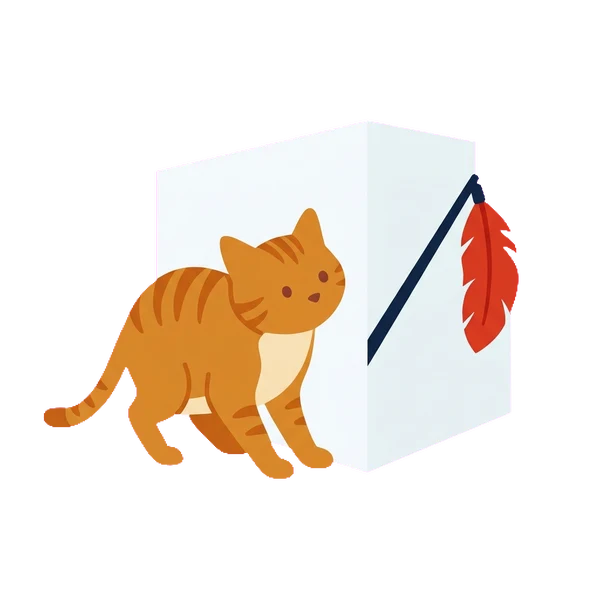
Round the corner for cats: how to play
The toy peeks around a doorway or the end of the sofa and vanishes. Your cat learns to wait, plan and ambush.
Game · 10 min
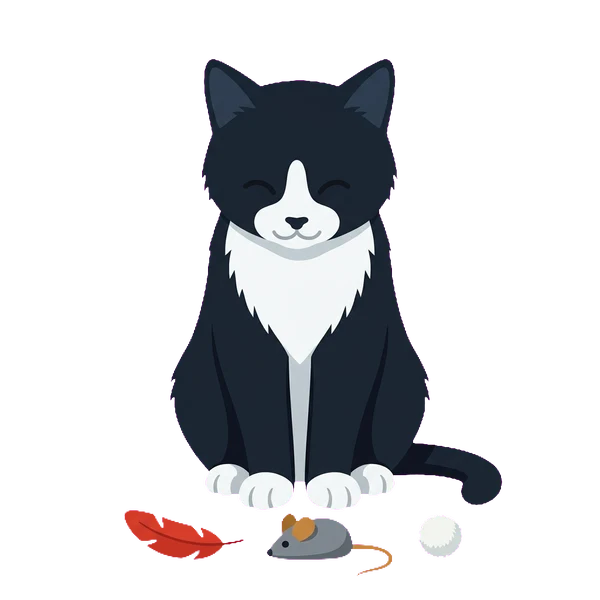
Find your cat's prey for cats: how to play
A short test game that switches between bird, mouse and bug toys to learn which prey your cat loves most. Sets the play style on its profile.