Indoor or outdoor
Weigh the safety risks of indoor life against the freedom and stimulation of outdoor access, and learn how to make either choice work for your cat.
Cats can live well indoors or with time outside. This article sets out the benefits and trade-offs of each, and how to lower the risks either way.
Guidance differs
Feline guidance does not all point one way. There are both risks and benefits to cats living indoors only or spending some time outdoors, and one position statement describes indoor/outdoor living in a safe environment as the best option for pet cats. Other guidance treats the decision as a careful look at the pros and cons of each option.
Some cats face extra risk outdoors. Cats with feline immunodeficiency virus (FIV) can pass the virus to other cats, usually through fighting, and are more susceptible to picking up infections themselves. Cats who are deaf, blind or have limited mobility are less able to move to a safe place quickly.
Keeping your cat indoors: the benefits
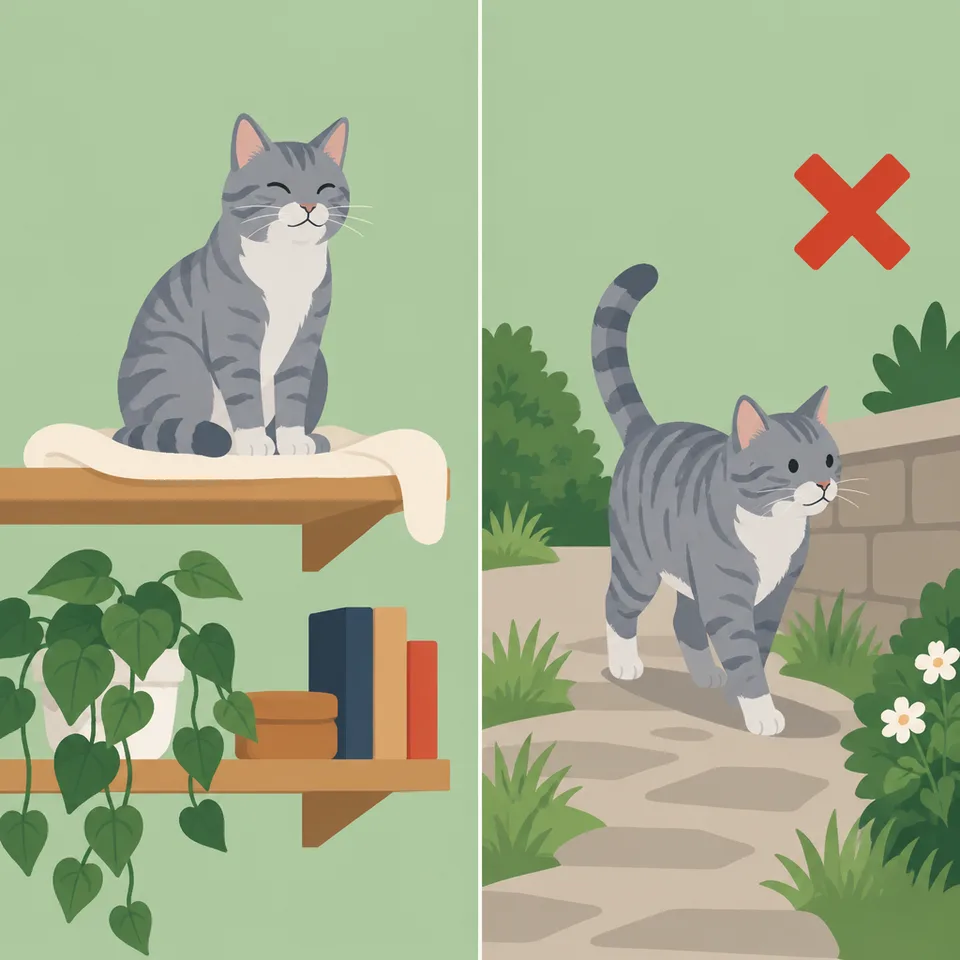
Indoor life reduces some physical risks. Your cat is safer from territorial disputes with neighbouring cats, which can lead to fights, and more protected from catching infectious diseases from other cats. There is less risk of serious injury, such as being attacked by a dog or hit by a car, and less chance of eating certain toxins. Some owners also choose indoor life to protect wildlife from hunting.
Keeping your cat indoors: the trade-offs
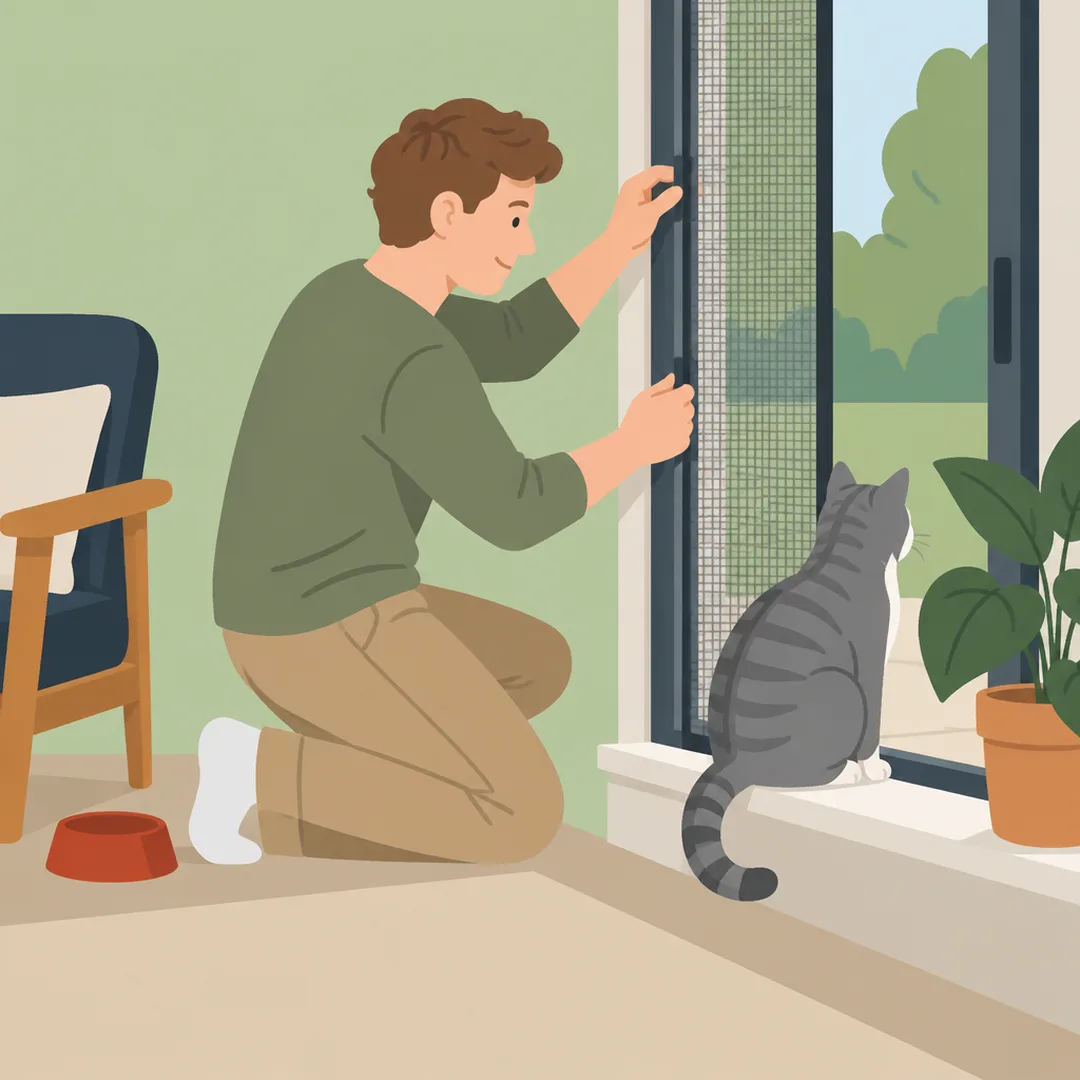
Indoor homes are not risk-free. Cats are curious and can eat or chew poisonous plants, human medicines or cleaning products. They can burn themselves, become trapped or injured by furniture, or fall from windows.
Indoor life can also be frustrating. Your cat may see neighbouring cats in the garden but cannot chase them away or mark over their scent. The biggest concern is mental wellbeing: a predictable, monotonous environment with less chance to hunt and explore can cause long-term stress.
Letting your cat outdoors: the benefits
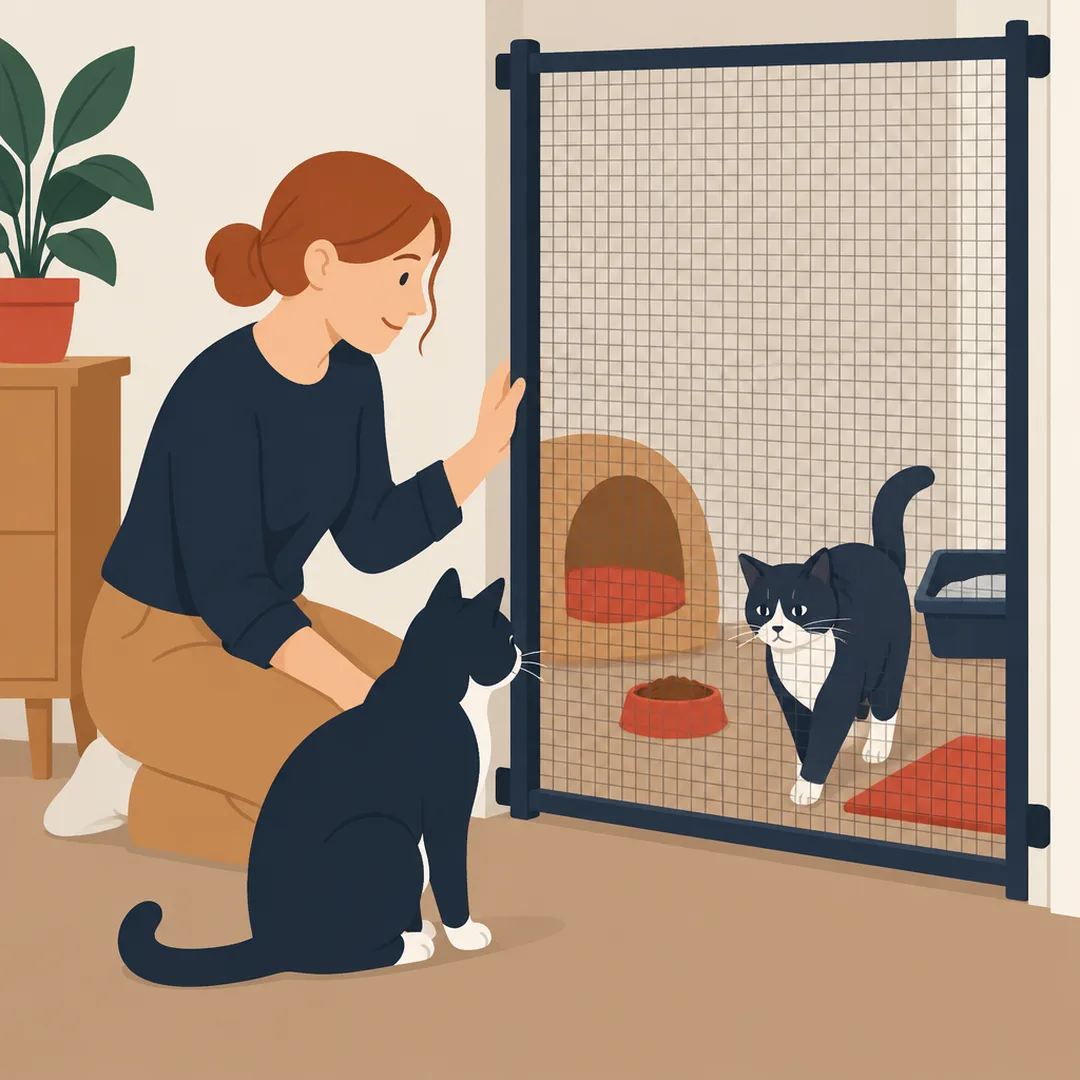
Outdoor access gives your cat a larger, more varied and stimulating environment. They get more control and choice, more exercise and more chances to explore. Hunting, climbing and patrolling their territory uses energy, and outdoor cats tend to be a more ideal weight than indoor cats. The outdoors also offers more choice of scratching surfaces, such as a variety of trees, gates or posts. In a multi-cat home, more space to get away from each other can reduce tension.
Letting your cat outdoors: the risks
Outdoor cats face traffic, infectious diseases, parasites, fights, poisoning and getting lost. Road traffic accidents are a real risk: more occur in areas with higher levels of traffic.
Other cats are a social pressure. Cats will defend territory they see as theirs, and in crowded urban areas fighting and bites can cause injury. A bare courtyard may not give your cat the stimulation they need.
Making either choice work
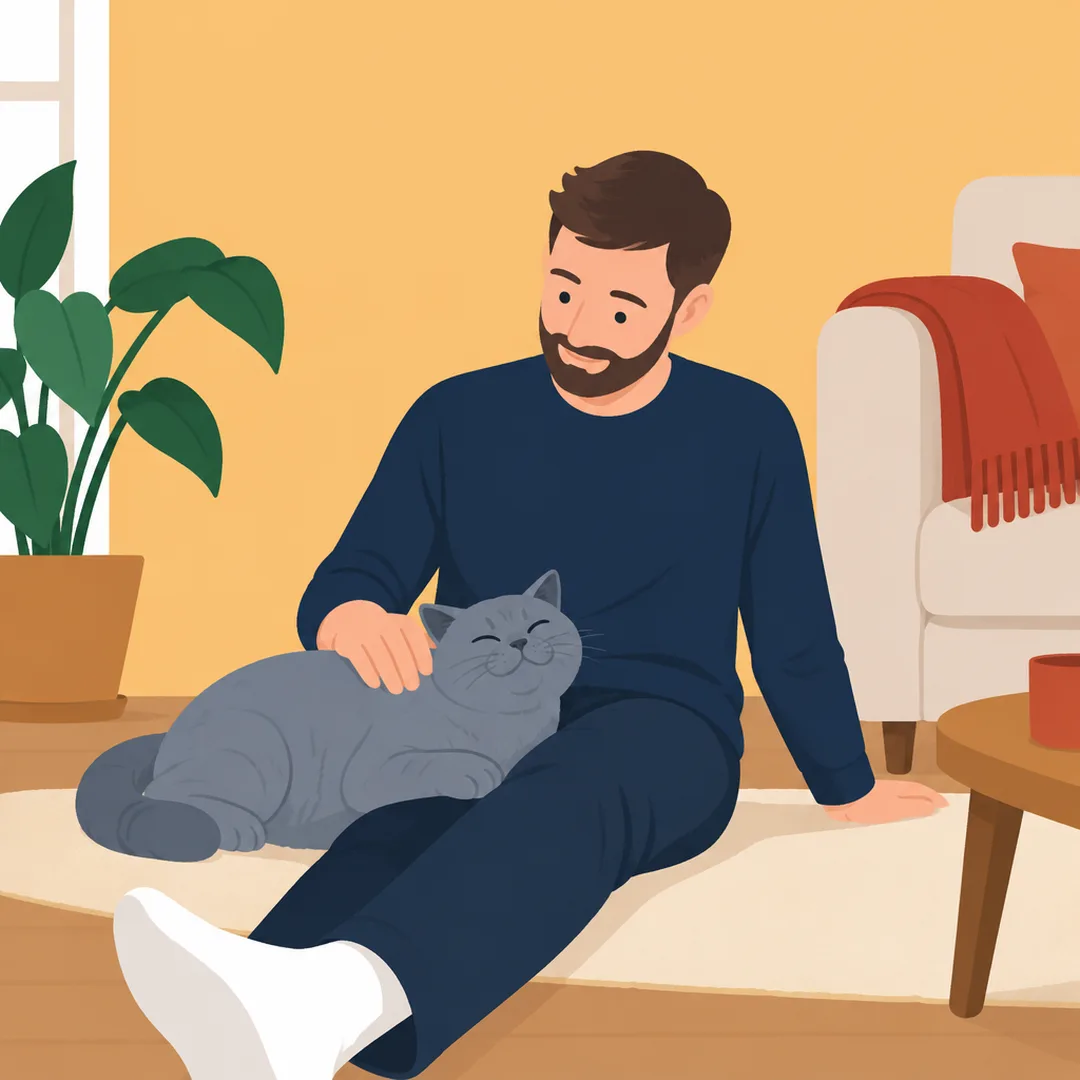
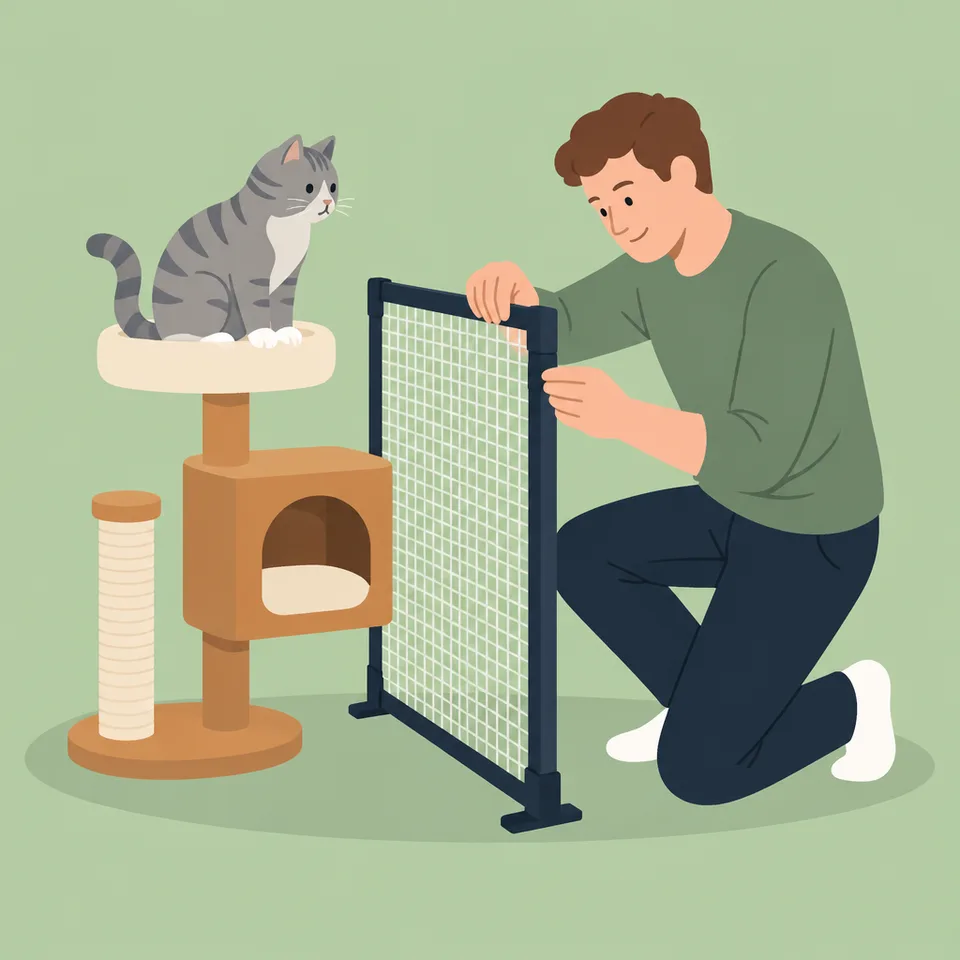
For an indoor cat, build the environment. Provide a safe place, and multiple, separated resources for food, water, toileting, scratching, play and rest. Offer play and predatory behaviour, give vertical space with shelves and cat trees, and play with your cat daily using a variety of toys.
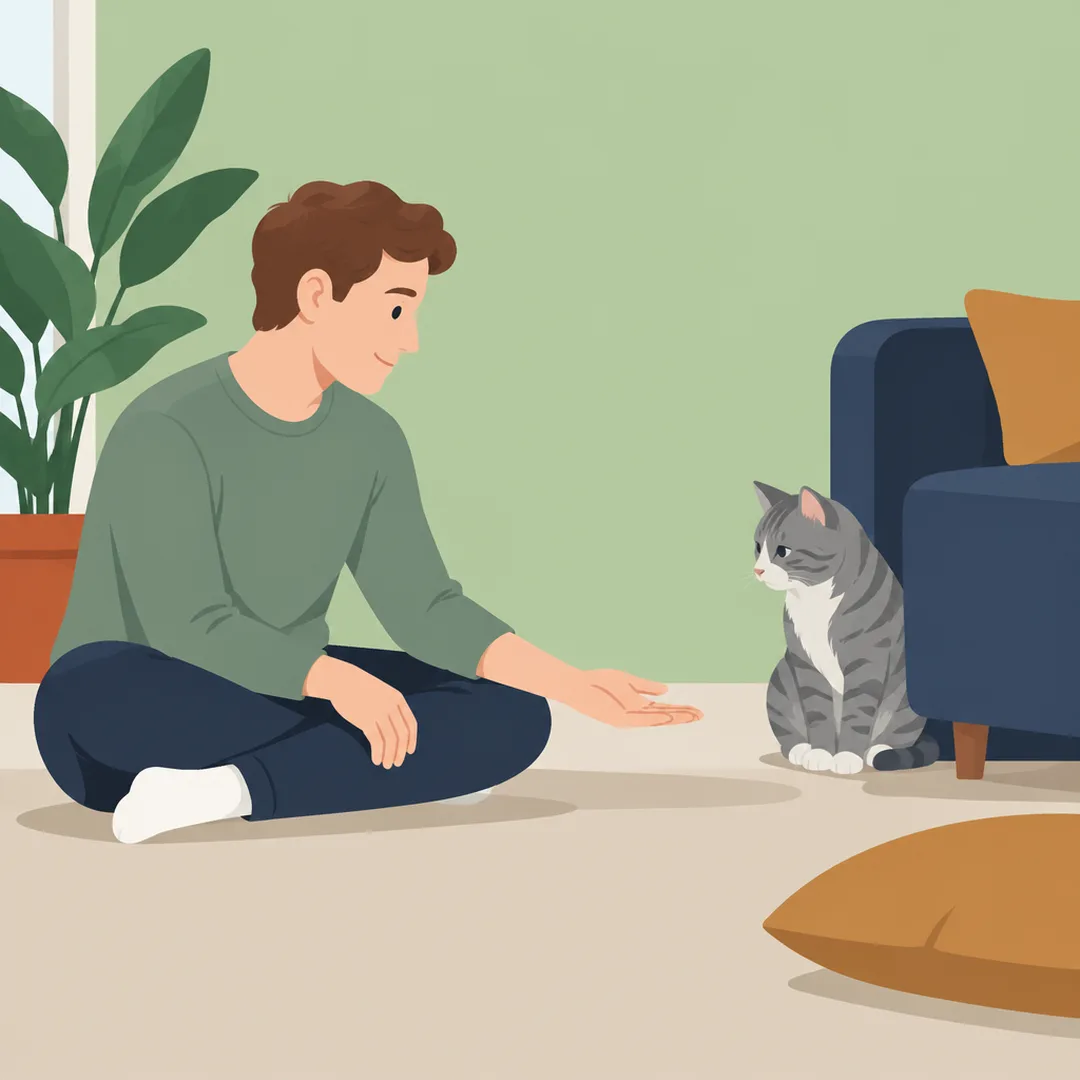
For a cat who goes out, start carefully. Begin with supervised time outside, and keep kittens supervised until they are 6 months old. Teach recall indoors first by calling your cat and rewarding them with treats when they come.
Health care either way
Indoor cats may have a lower risk of catching some diseases and picking up parasites, but the risk is still there. Keep your cat microchipped, neutered and vaccinated, and treat them routinely for parasites, especially worms and fleas. Ask your vet what your cat needs.
Key points
- Guidance differs. Base the choice on your cat, your home and what you can offer safely.
- Indoor life reduces some physical risks, but the home still holds hazards and needs enrichment.
- Outdoor access offers exercise, choice and natural behaviour, but brings traffic, disease and fighting risks.
- Indoor homes need a safe place, separated resources, vertical space and daily play.
- Outdoor cats need supervised starts and recall training, and all cats need preventive health care.