Clicker training basics for cats
How a clicker works, how to 'charge' it, timing, treat delivery and the most common beginner mistakes. Everything you need before your first lesson.
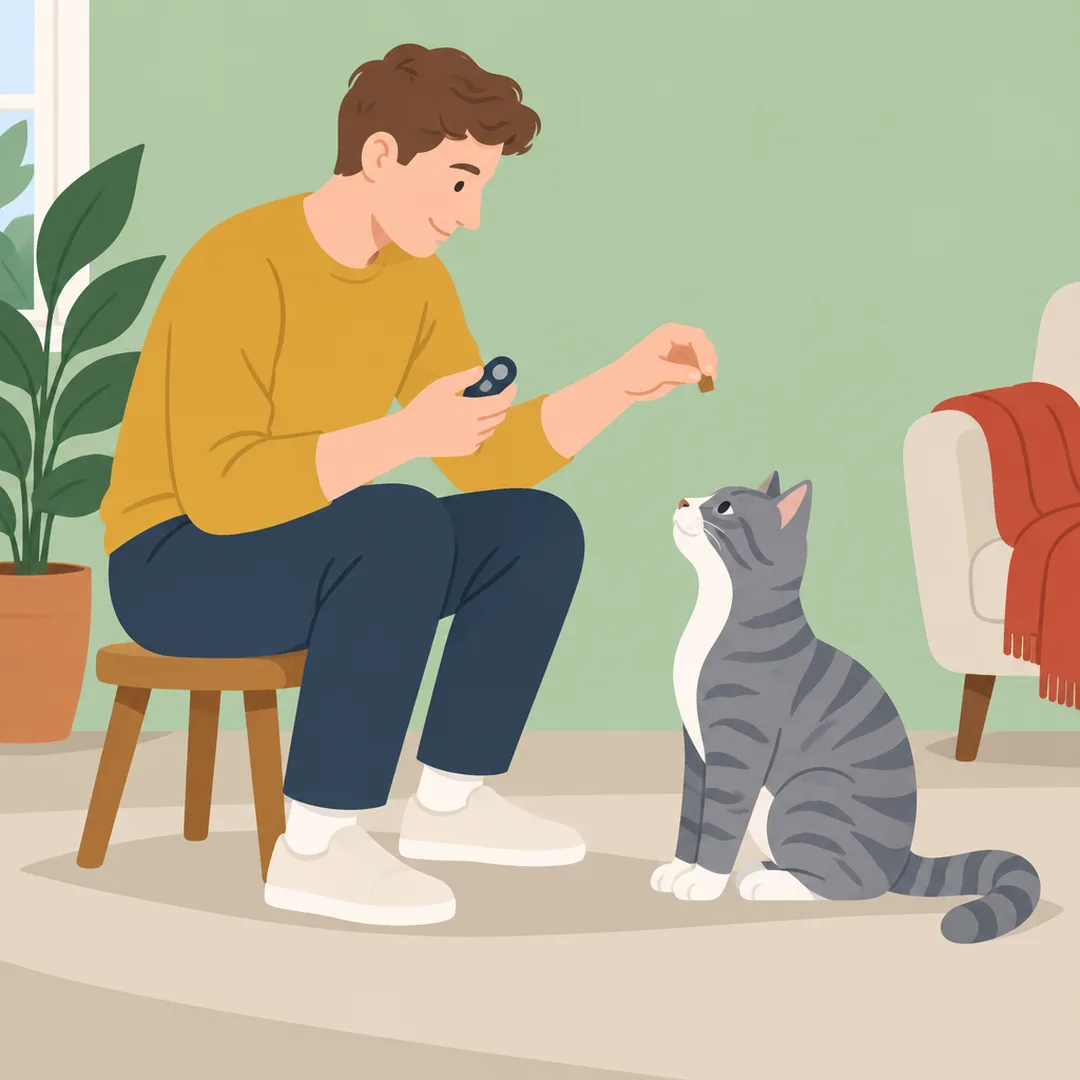
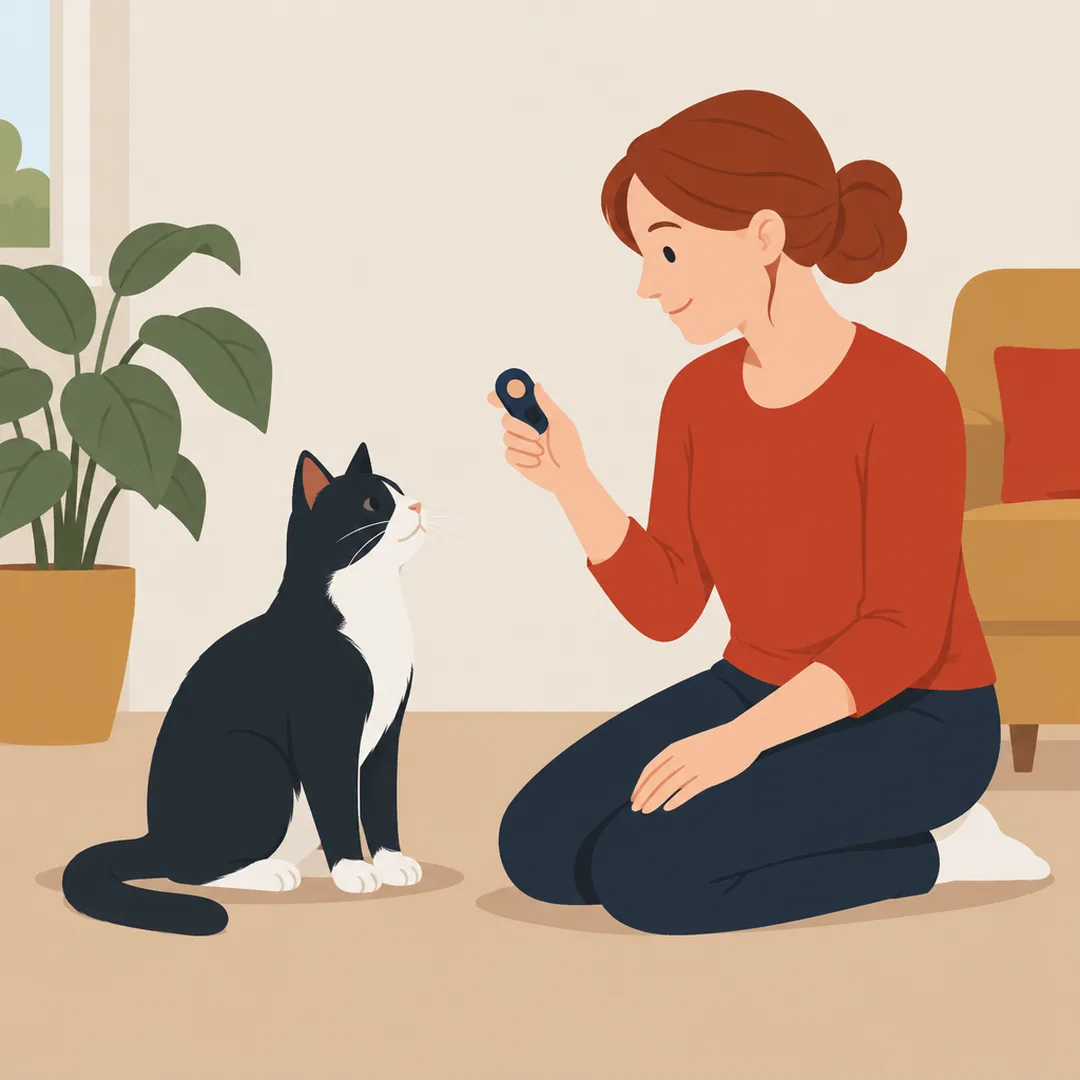
A clicker is a small device that makes a short, sharp sound. On its own it means nothing to your cat. After a few minutes of pairing it with treats, it becomes a powerful signal: "that exact thing you just did earns a reward". That precision is what makes clicker training fast and clear.
Why a click works
When your cat does something you like, you rarely have a treat at their mouth that same instant. If the treat arrives two seconds later, your cat may connect it with whatever they were doing then, like turning away. The click happens at the exact moment of the behaviour and promises that food is on the way. It "takes a photo" of the right moment.
The click is also always the same sound, unlike your voice, which changes with mood. Cats learn it quickly.
What you need
- A clicker. Box clickers are loud; button clickers and soft clickers are quieter. Sound-sensitive cats may prefer a soft click or a click from a ballpoint pen (see the marker choice article).
- Tiny, soft treats your cat loves: about the size of a pea or smaller. Lickable paste treats on a spoon also work.
- A quiet room and three to five minutes.
Charging the clicker
"Charging" teaches your cat that click means treat.
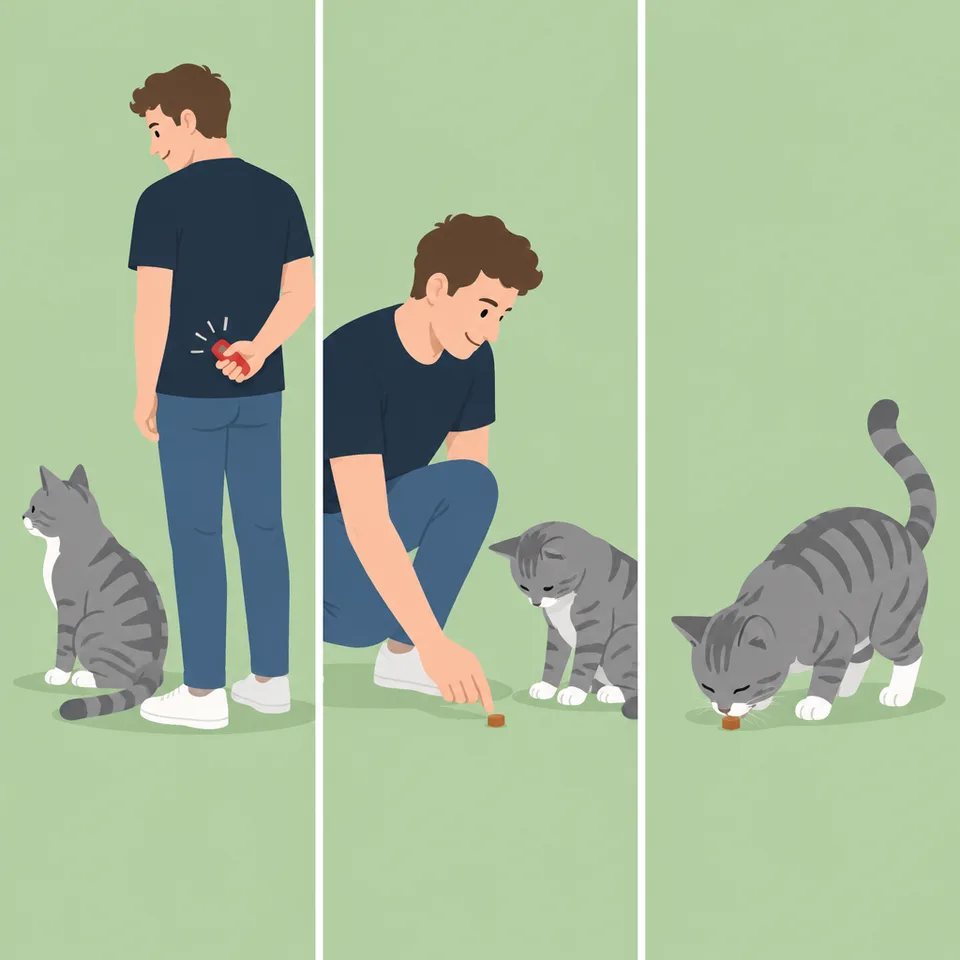
- Sit near your cat with a few treats ready.
- Click once. Within a second, give a treat.
- Wait a few seconds, until your cat is looking elsewhere. Click and treat again.
- Repeat 10 to 15 times in one session.
- In the next session, click while your cat is looking away. If their head whips round toward you or the treat hand, the click has meaning.
Hold the clicker behind your back or in a pocket if the sound is loud. Do not click near your cat's ear.
The golden rules
- One click, one treat. Every click is followed by a treat, even if you clicked by mistake. That keeps the click meaningful.
- Click once. More clicks do not mean more excitement. Give more treats instead for a great effort (a "jackpot").
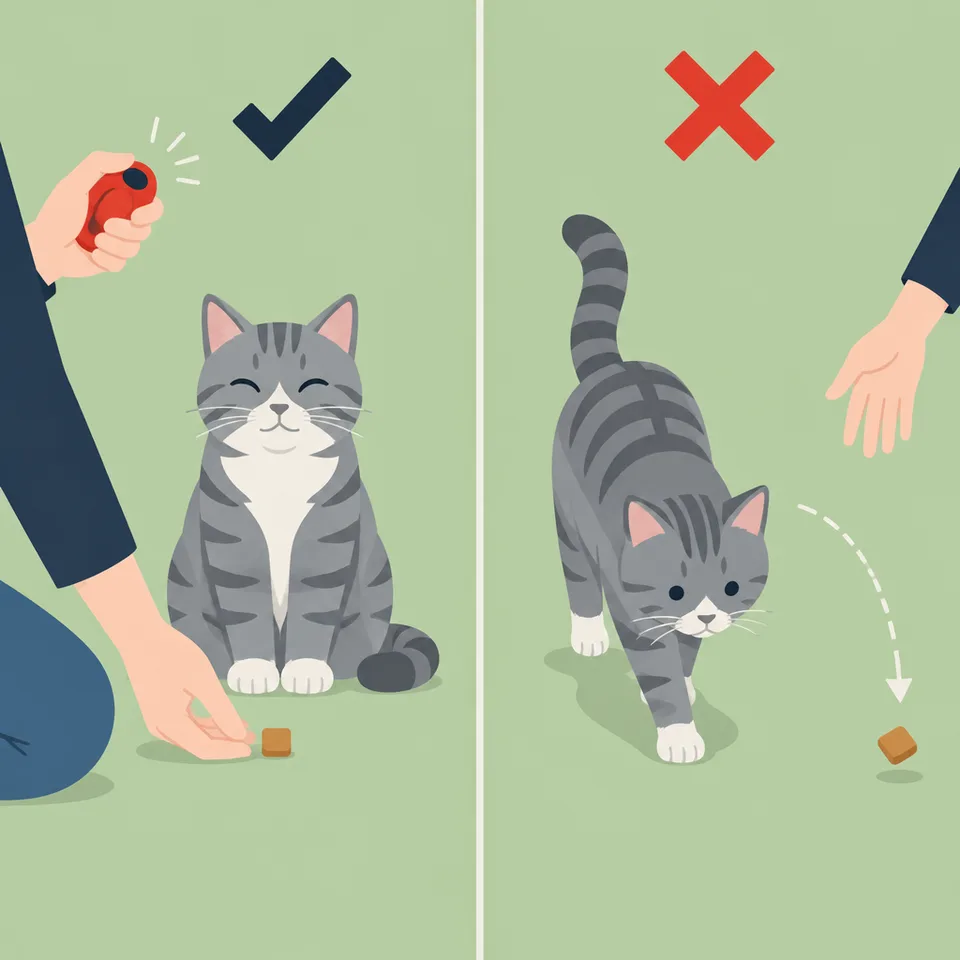
- Click during the behaviour, then treat. Do not reach for the treat before you click, or your cat will watch your hand instead of the task.
- The click ends the behaviour. It is fine if your cat stops what they were doing when they hear it.
- Do not use the clicker to get attention. Calling your cat with a click wears out its meaning.
Timing
Clicker training is mostly about timing. Click the instant your cat does the thing you want, not a moment before or after.
Practise without your cat: bounce a ball and click when it hits the floor, or watch TV and click every time someone blinks. A minute a day for a few days makes a big difference.
Treat delivery
Where you put the treat matters as much as when.
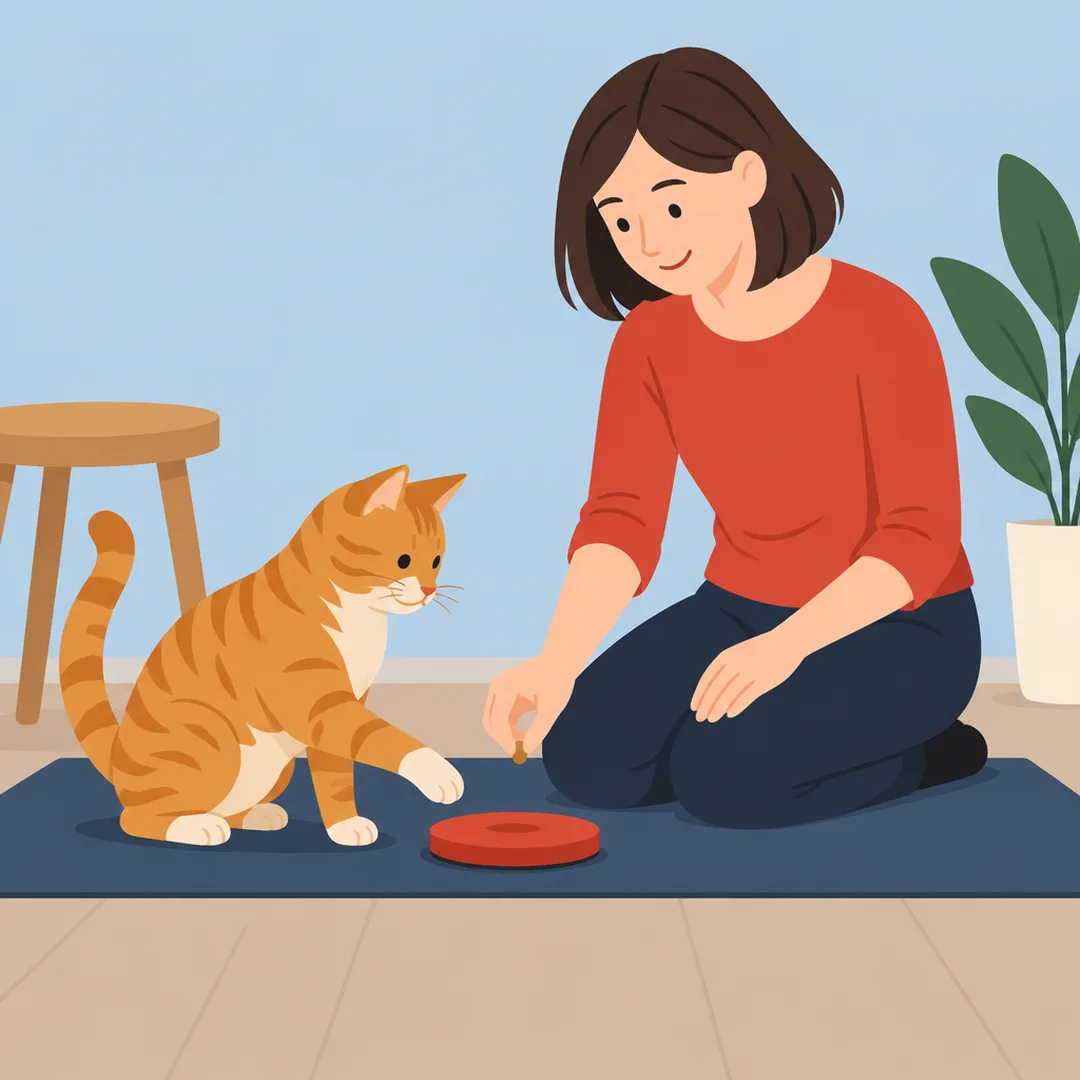
- Treat in position to keep your cat doing the behaviour. For a sit, deliver the treat at nose level so the bottom stays down.
- Toss the treat away to reset your cat so they can repeat the behaviour, such as walking back onto a mat.
- Be fast and calm. Have treats in a pouch or small dish, not in a crinkly bag.
Your first behaviour: nose target
Target training is the classic first lesson.
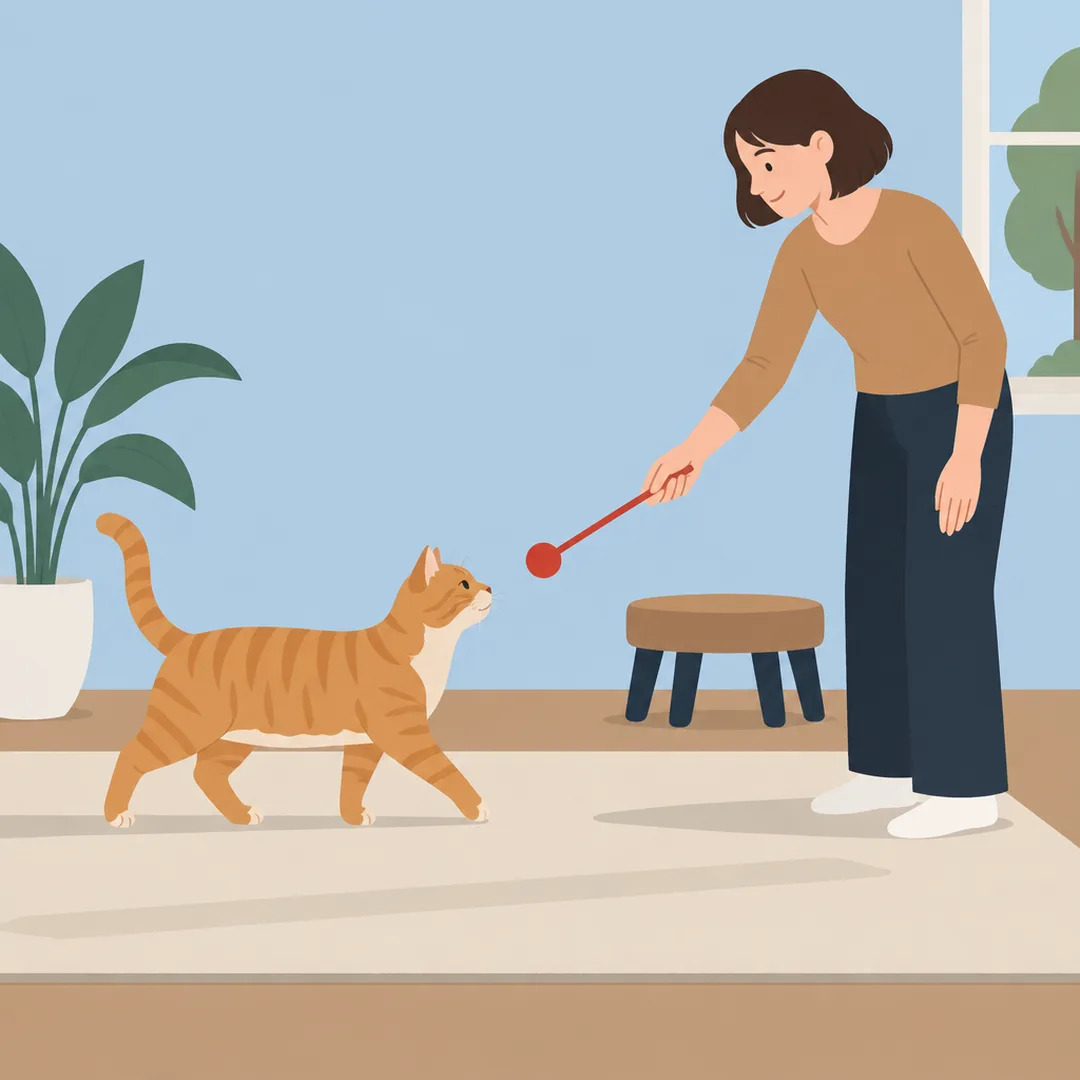
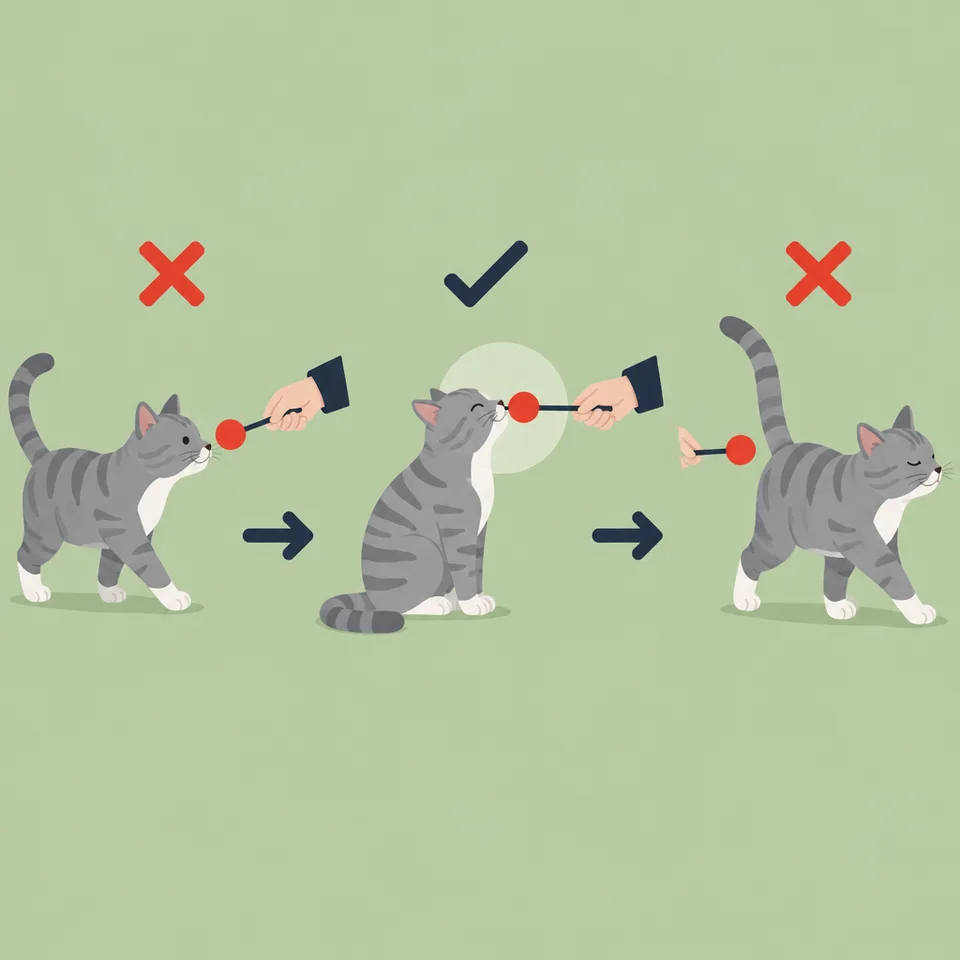
- Hold out a target (a chopstick with a ball on the end, or two fingers) a few centimetres from your cat's nose.
- Most cats sniff it. Click the instant the nose touches. Treat.
- Remove the target behind your back, then present it again.
- After 8 out of 10 touches, move it a little to one side, then up, then down.
- Add a cue word such as "touch" once your cat touches reliably.
Targeting is the basis for teaching come, spin, jump onto a chair, walk into a carrier and much more.
Common beginner mistakes
- Sessions too long. Stop at three to five minutes, or after 10 to 20 clicks.
- Waiting too long between rewards. If your cat goes more than about 10 seconds without a click, make it easier.
- Treats too big. Your cat fills up fast and loses interest.
- Repeating the cue. "Touch, touch, TOUCH" teaches your cat to wait for the third one. If your cat does not respond, make the task easier, not louder.
- Training when your cat is tired, full or stressed. Pick a time when they are alert and a bit hungry.
Key points
- The click marks the exact moment your cat does the right thing and promises a treat.
- Charge the clicker first with 10 to 15 click-treat pairs.
- One click always equals one treat, even when you click by mistake.
- Practise timing without your cat, and deliver treats where they help the next repetition.
- Keep sessions short and make it easier, not louder, when your cat struggles.